Why great creative businesses need more than just a website
Some businesses grow through marketing. Others grow through reputation.
Creative businesses often fall into the second category. Their work speaks for itself, referrals drive new opportunities, and momentum builds organically. But eventually there comes a point where reputation alone isn’t enough. The digital experience has to match the quality of the work.
We see this often at GoTripod. The craftsmanship is exceptional, the service is outstanding, but the brand and online presence don’t yet communicate that value clearly.
And in a world where first impressions are almost always digital, that gap can quietly limit growth.
The gap between good work and great presentation
When someone lands on a website or social profile, they make decisions quickly. Before reading much at all, they’re subconsciously asking:
Does this feel professional?
Does this feel established?
Can I trust this business?
If the brand feels inconsistent, the imagery feels generic or the website feels dated, uncertainty creeps in - even when the work itself is excellent.
For creative businesses, presentation isn’t decoration. It’s evidence of quality.
A real example: Leona Ashley Seasonal Designs
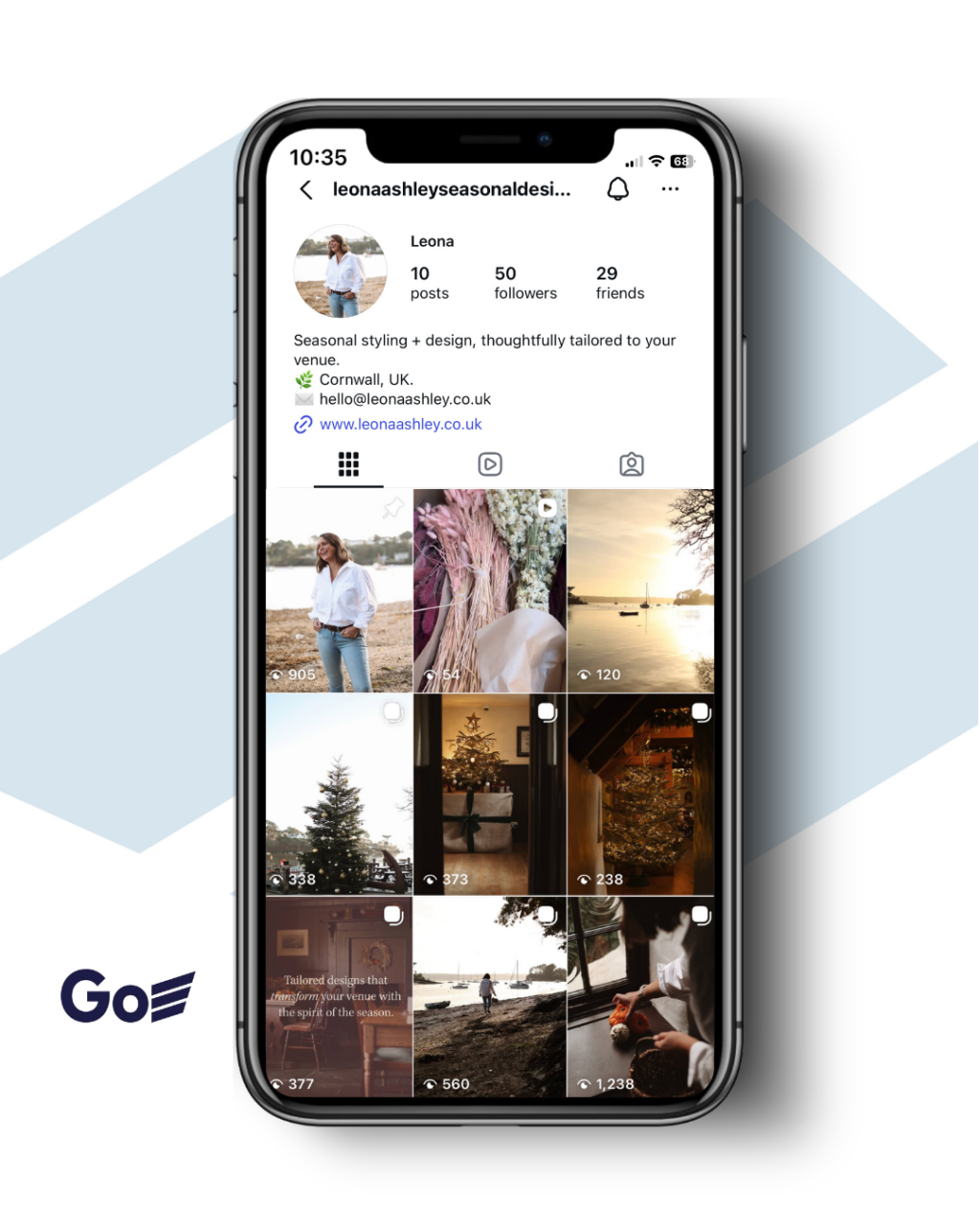
Leona Ashley Seasonal Designs is a business built on creativity, craftsmanship and beautifully styled seasonal spaces. Her work transforms venues and experiences, but when she approached us, her digital presence didn’t yet reflect the personality or quality of her designs.
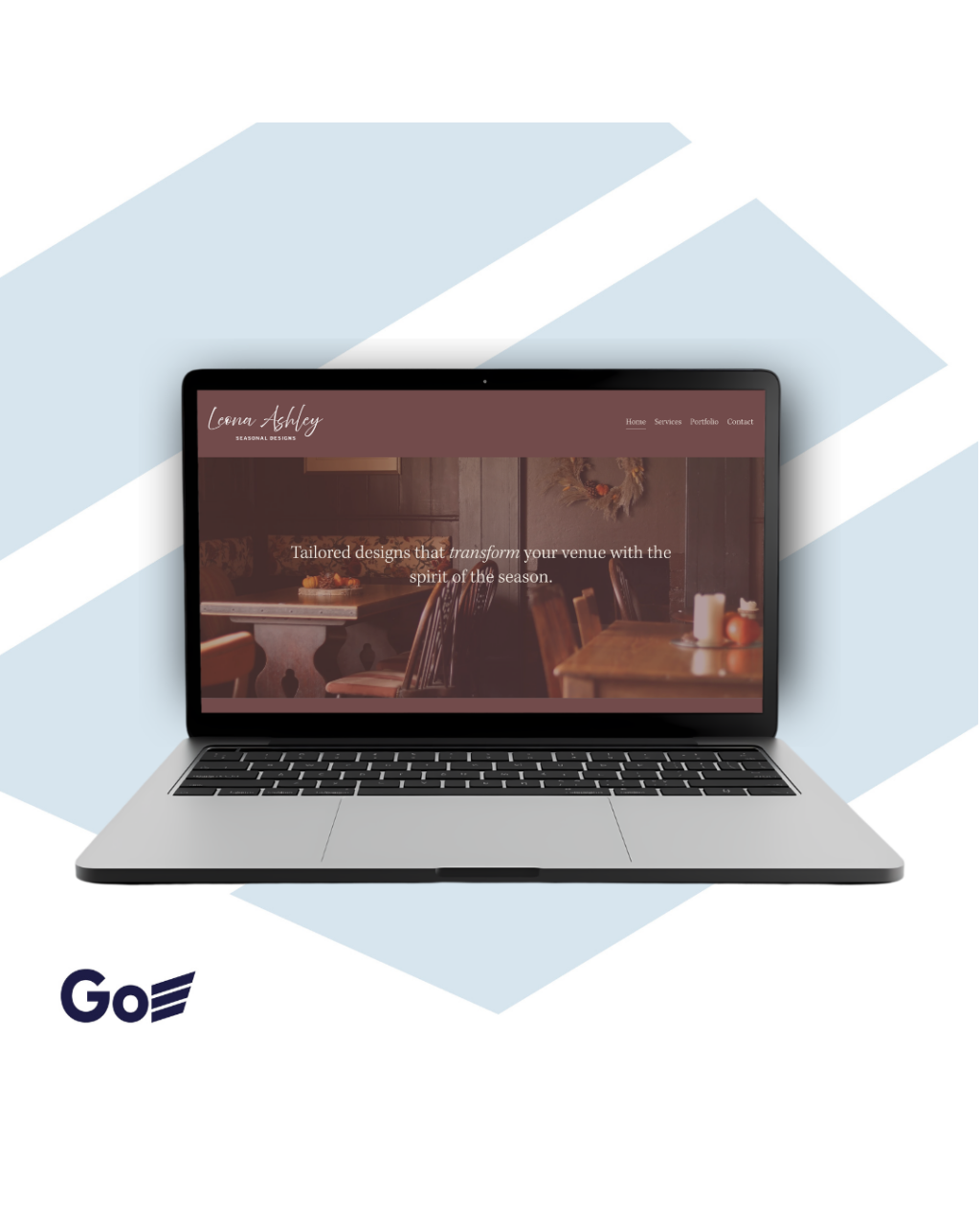
Our goal wasn’t simply to build a website. It was to create a cohesive brand experience.
We developed a distinctive brand identity, designed a modern website to showcase her portfolio with clarity, produced authentic photography and video to capture the atmosphere of her work, and now support the brand with ongoing social media management and digital maintenance.
The result is a digital presence that mirrors the essence of the business - thoughtful, elegant and unmistakably personal.
Brand, content and platform working together
Strong brands rarely come from isolated projects. They emerge when identity, content and digital platforms support each other.
When branding, photography, website design and social content align, businesses can:
- Position themselves confidently
- Build trust faster
- Communicate their value clearly
- Turn interest into genuine enquiries
For creative businesses especially, authenticity plays a crucial role. Real work, real environments and real visual storytelling build far more credibility than abstract or generic imagery ever could.
Digital presence is an ongoing process
A website launch isn’t the finish line. It’s the starting point.
Brands grow, portfolios evolve and new content emerges. Businesses that treat their digital presence as an evolving system, maintaining their website, expanding visual assets and consistently showing their work, tend to see far stronger long-term results.
Because the most successful creative brands don’t just produce beautiful work. They present it beautifully too!
Start the conversation
If you’re building a creative business and your digital presence doesn’t yet reflect the quality of your work, you’re not alone. Bridging that gap can be one of the most valuable investments a growing business can make.
At GoTripod, we help organisations bring their brand, content and digital platforms together into a cohesive experience that feels authentic and credible from the very first impression.
If you're thinking about how your business shows up online, drop us a line — we’d love to hear what you’re building.
The tagline is back
For years, the tagline was treated like a relic, something brands dusted off for campaigns and then quietly shelved. But in 2025, it’s back in demand. We’ve seen it in RFPs (Requests for Proposals) from pharmaceuticals to footwear, and in the market itself: Tag Heuer’s “Designed to Win”, Ford’s global “Ready Set Ford”, Carrier’s purpose-driven “For the world we share.” Even Shake Shack made headlines for simply announcing they plan to have a tagline.
And then there’s Nike. By evolving “Just Do It” into “Why Do It?”, they’ve reimagined the most iconic tagline of all time, turning a call to action into a question that speaks to a new generation. That’s not nostalgia; that’s strategy.
Why now?
Two forces are driving this resurgence:
- Complexity inside brands. Today’s brand systems span continents, channels, and cultures. Maintaining consistency is hard. A tagline offers clarity, a single phrase that cuts through complexity and anchors the brand.
- Noise outside brands. With AI reshaping the digital landscape and performance marketing under pressure, attention is scarce. Adobe Analytics reports a 1,200% surge in retail traffic from generative AI sources in just eight months. In this shifting infoscape, a tagline becomes a beacon, a memorable hook that helps your brand stand out.
The risk and the opportunity
A tagline isn’t a silver bullet. It can’t fix broken processes or replace a robust brand system. But when designed with clarity, purpose, and creativity, it can amplify your story and signal a new chapter.
Think of it like a tag on a pair of jeans: part of a bigger whole. Your tagline should work in harmony with your name, logo, tone of voice, and design system, not overshadow them.

How to make it matter
- Assign a role. Is it a rallying cry, a mindset, a heritage marker? Define its job before you write it.
- Design it like an asset. Treat your tagline with the same rigour as your logo: strategic, distinctive, and built to last.
- Think dialogue, not monologue. Nike’s “Why Do It?” works because it builds on decades of conversation with athletes. Your tagline should invite engagement, not just deliver a punchline.
Why SMEs should care
Big brands aren’t bringing back taglines for fun. They’re doing it because clarity wins in a noisy world. For SMEs, that matters even more. You don’t have global ad budgets, but you do have the ability to be sharp, memorable, and consistent. A tagline is your shortcut to that clarity.
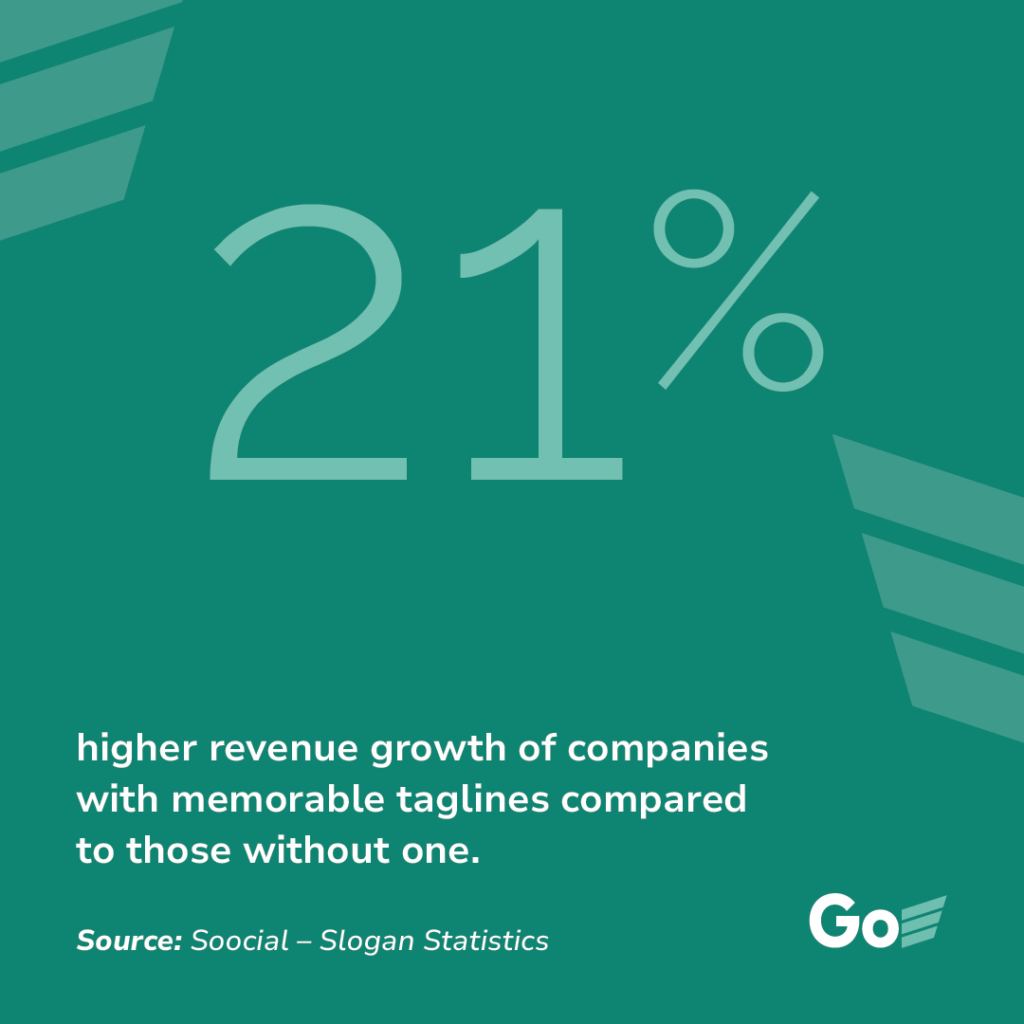
Here’s why it works for SMEs:
- Cuts through complexity. SMEs often juggle multiple roles and messages. A tagline anchors your brand and keeps everyone aligned.
- Boosts trust and professionalism. A well-crafted tagline signals maturity and confidence, key for winning investors, partners, and customers.
- Works everywhere. From your website to your pitch deck, social posts to packaging, a tagline gives you consistency without extra effort.
In short, a tagline is a small investment with a big return. It’s not just a line, it’s a lever for growth.
The bigger picture
At GoTripod, we believe brand expression is a system, not a slogan. A tagline can spark attention, but the real power lies in how your brand elements work together: messaging, design, experience, and yes, software. Because in a world where complexity is the norm, clarity isn’t just nice to have. It’s transformative.
Ready to craft a tagline that actually means something? Let’s create it—together.
Authenticity and human connection in digital design
In a world dominated by automation and AI-driven experiences, the brands that stand out aren’t the ones shouting the loudest. They’re the ones speaking the truth. Authenticity and human connection aren’t trends, they’re timeless principles that matter more than ever
Why authenticity matters

Authenticity is the foundation of trust. When a brand feels real, people lean in. They believe what you say, engage with what you create, and stay loyal when competitors try to lure them away.
In design, authenticity shows up in the details: the tone of your copy, the honesty of your imagery, and the clarity of your user experience. Consumers today are hyper-aware. They can spot generic templates, stock photos, and hollow messaging from a mile away. They crave brands that feel human, brands that share values, admit imperfections, and communicate with clarity and confidence.
Psychological insight: People are wired to seek patterns that feel familiar and safe. Authentic design taps into this by using real-world cues, natural language, relatable imagery, and consistent visual systems, to reduce cognitive load and build trust. This is cognitive ease in action: when something feels simple and intuitive, it feels right.
Human connection in a digital world
Technology has made it easier to reach people, but harder to truly connect. Automated emails, AI chatbots, and algorithm-driven feeds often strip away the warmth of human interaction. That’s why design must do more than look good, it must feel good. It should create moments of empathy, spark dialogue, and remind users that there are real people behind the pixels.
Human connection in design means:
- Conversational tone instead of corporate jargon.
- Inclusive experiences that respect diversity and accessibility.
- Visual storytelling that reflects real life, not staged perfection.
- Micro-interactions that feel thoughtful, not mechanical.
Psychological insight: Reciprocity matters. When brands show care and effort in design, through helpful content, intuitive flows, and genuine messaging, users feel valued and respond with trust and loyalty.
Principles behind authentic design
Clarity over complexity
Authentic brands don’t hide behind jargon or over-engineered interfaces. They communicate simply and design for ease. Every click should feel intuitive, every message should feel honest.
Psychology at play: Cognitive ease makes users trust what feels simple and clear.
Consistency builds trust
From your logo to your language, consistency signals reliability. It’s not about rigid templates, it’s about creating a unified experience that feels familiar and dependable across every touchpoint.
Psychology at play: The mere-exposure effect shows that familiarity breeds comfort. Consistent design elements help users feel safe and confident.
Empathy at every stage
Design with empathy means understanding user needs, frustrations, and aspirations. It’s about mapping journeys that remove friction and add delight. When users feel understood, they feel connected.
Psychology at play: Empathy mapping reduces anxiety and builds trust, especially during onboarding or error states.
Transparency is non-negotiable
Whether it’s pricing, policies, or product features, transparency is the bedrock of authenticity. In design, this means clear navigation, accessible content, and honest messaging.
Human-centred innovation
Innovation isn’t about adding features for the sake of novelty. It’s about solving real problems for real people. Every design decision should start with the question: “How does this make life better for the user?”
The business case for authenticity
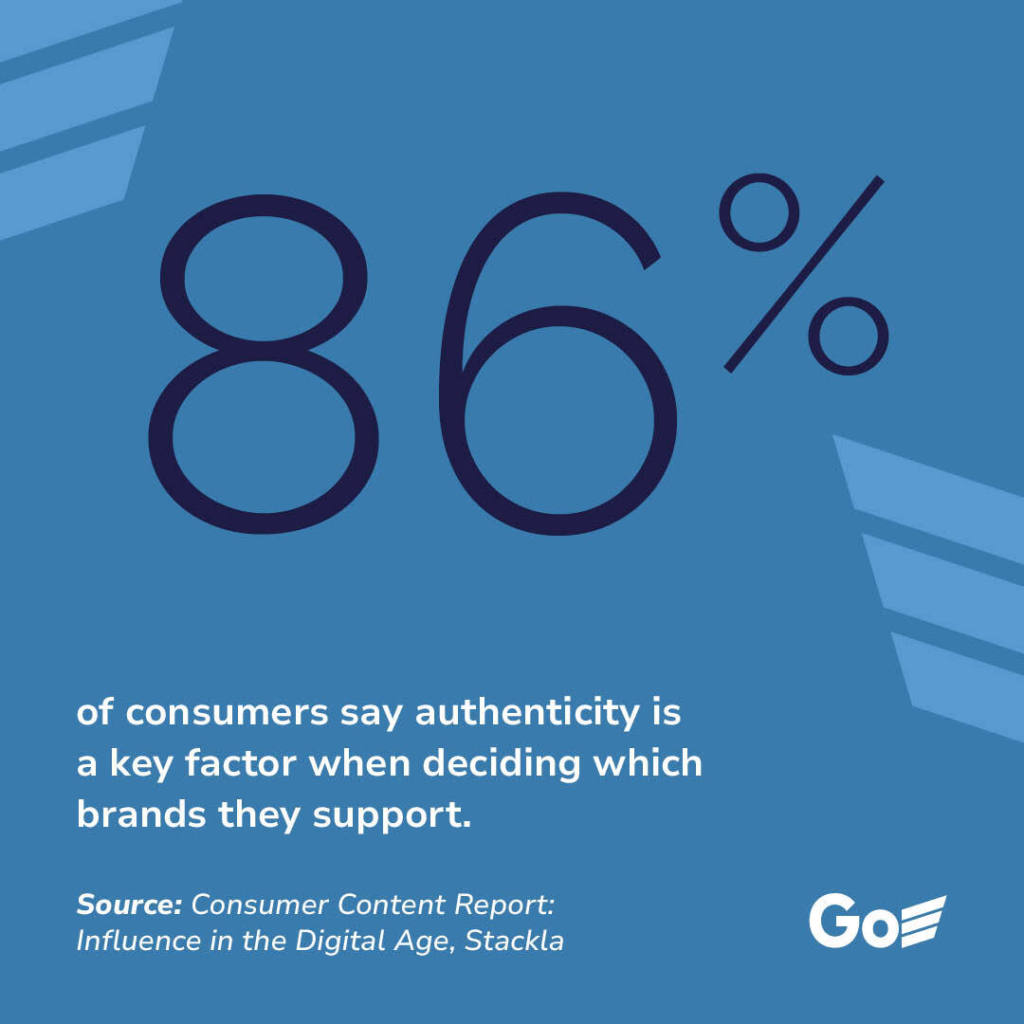
Authenticity isn’t just a feel-good concept, it drives measurable results. Research shows that 86% of consumers say authenticity is a key factor when deciding which brands they like and support (Stackla). Brands that prioritise human connection see higher engagement, stronger loyalty, and better conversion rates.
When design reflects authenticity, it becomes a growth engine. It turns users into advocates and transactions into relationships.
How GoTripod embeds authenticity
At GoTripod, we believe design is more than aesthetics, it’s a conversation. We embed authenticity and human connection into every stage of the digital journey:
- Discovery workshops to uncover real user needs and brand truths.
- Inclusive design principles to ensure accessibility and representation.
- Tone of voice frameworks that sound human, not robotic.
- Visual storytelling that feels genuine and aligned with your brand values.
Our goal? To create digital experiences that don’t just perform, they resonate.
Conclusion
In an age of automation, authenticity is your competitive edge. Human connection is your growth strategy. Brands that embrace these principles will not only stand out, they’ll stand for something.
If authentic, human‑centred design is part of your growth strategy, let’s talk about how GoTripod can bring authenticity to your brand.