Why great creative businesses need more than just a website
Some businesses grow through marketing. Others grow through reputation.
Creative businesses often fall into the second category. Their work speaks for itself, referrals drive new opportunities, and momentum builds organically. But eventually there comes a point where reputation alone isn’t enough. The digital experience has to match the quality of the work.
We see this often at GoTripod. The craftsmanship is exceptional, the service is outstanding, but the brand and online presence don’t yet communicate that value clearly.
And in a world where first impressions are almost always digital, that gap can quietly limit growth.
The gap between good work and great presentation
When someone lands on a website or social profile, they make decisions quickly. Before reading much at all, they’re subconsciously asking:
Does this feel professional?
Does this feel established?
Can I trust this business?
If the brand feels inconsistent, the imagery feels generic or the website feels dated, uncertainty creeps in - even when the work itself is excellent.
For creative businesses, presentation isn’t decoration. It’s evidence of quality.
A real example: Leona Ashley Seasonal Designs
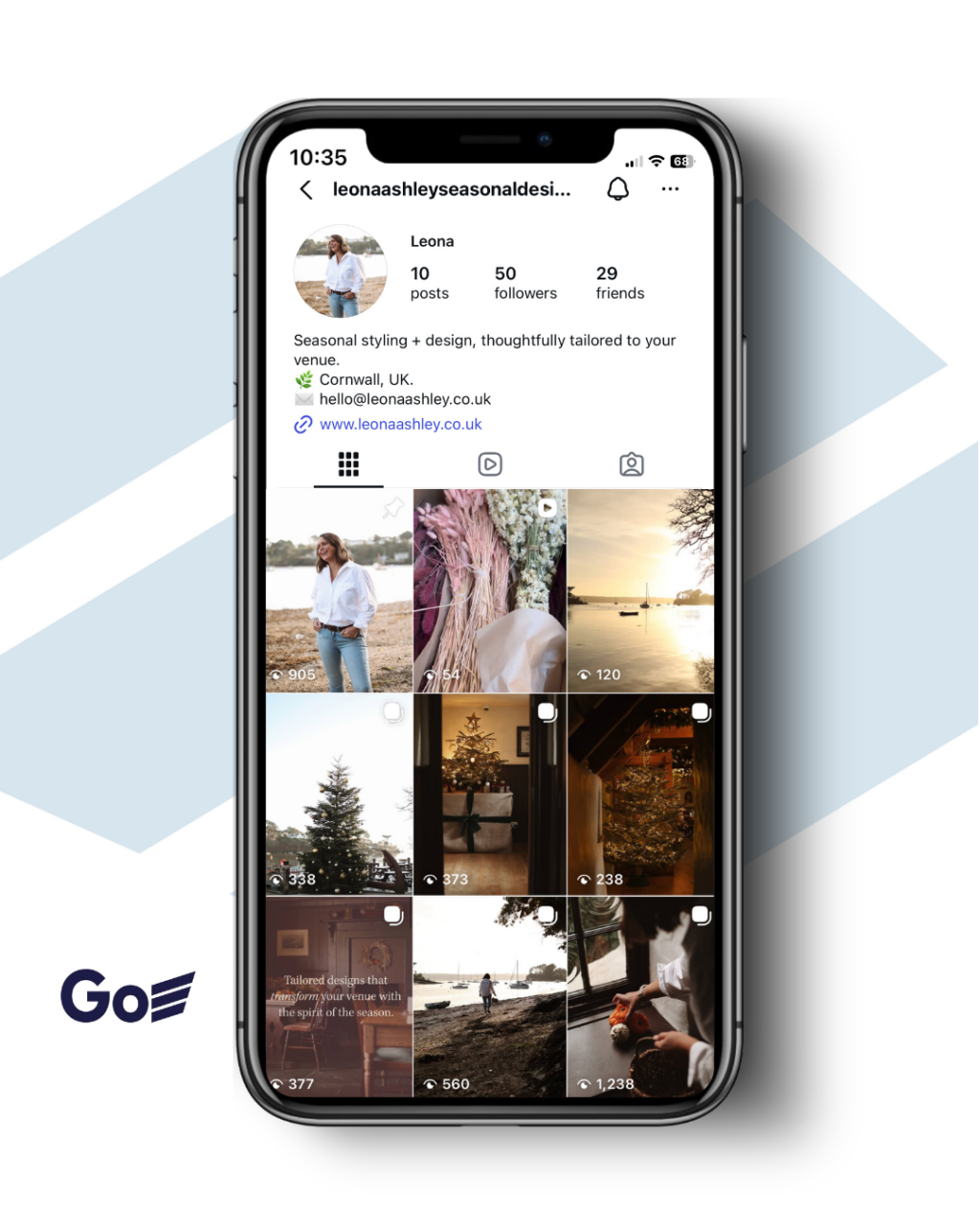
Leona Ashley Seasonal Designs is a business built on creativity, craftsmanship and beautifully styled seasonal spaces. Her work transforms venues and experiences, but when she approached us, her digital presence didn’t yet reflect the personality or quality of her designs.
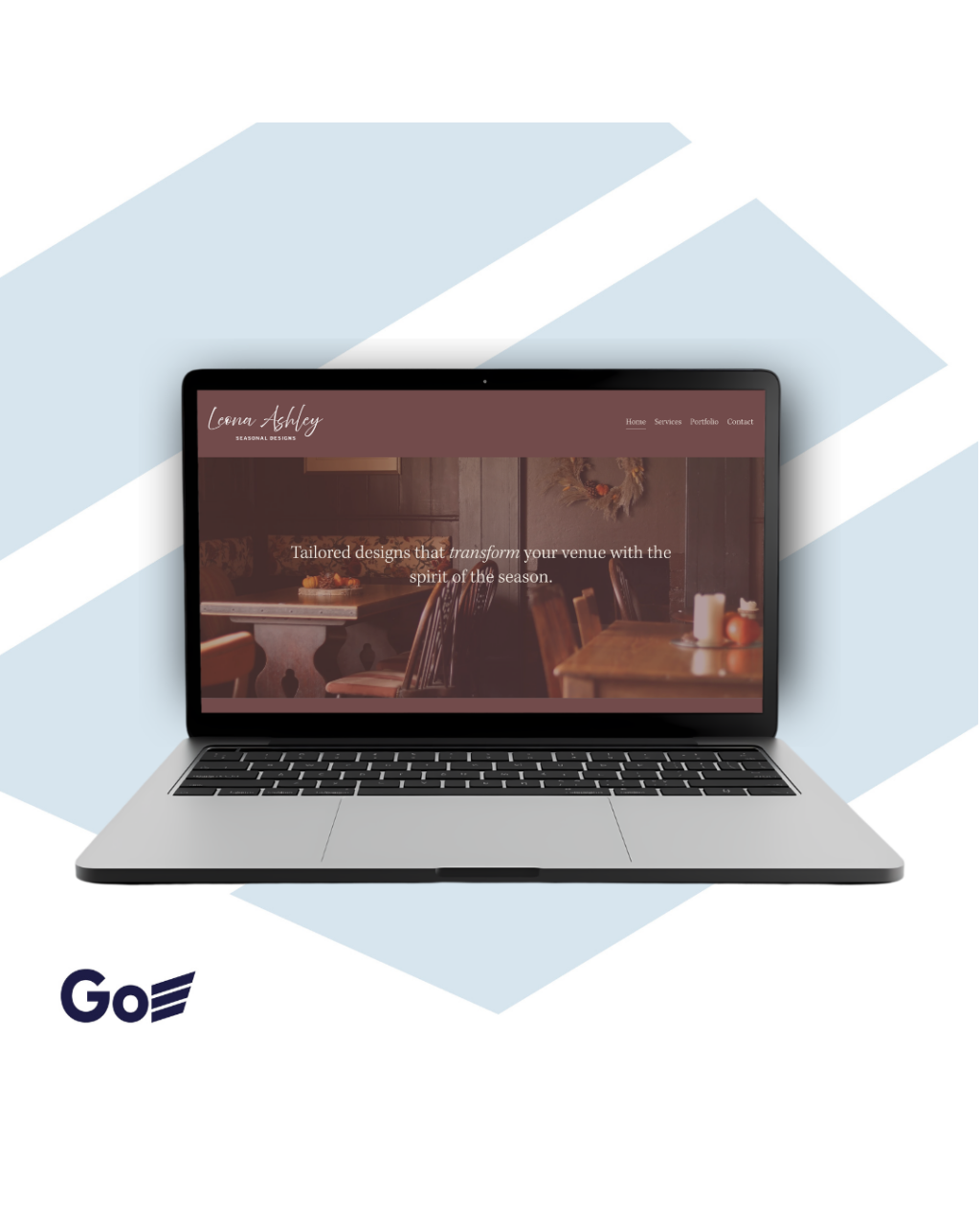
Our goal wasn’t simply to build a website. It was to create a cohesive brand experience.
We developed a distinctive brand identity, designed a modern website to showcase her portfolio with clarity, produced authentic photography and video to capture the atmosphere of her work, and now support the brand with ongoing social media management and digital maintenance.
The result is a digital presence that mirrors the essence of the business - thoughtful, elegant and unmistakably personal.
Brand, content and platform working together
Strong brands rarely come from isolated projects. They emerge when identity, content and digital platforms support each other.
When branding, photography, website design and social content align, businesses can:
- Position themselves confidently
- Build trust faster
- Communicate their value clearly
- Turn interest into genuine enquiries
For creative businesses especially, authenticity plays a crucial role. Real work, real environments and real visual storytelling build far more credibility than abstract or generic imagery ever could.
Digital presence is an ongoing process
A website launch isn’t the finish line. It’s the starting point.
Brands grow, portfolios evolve and new content emerges. Businesses that treat their digital presence as an evolving system, maintaining their website, expanding visual assets and consistently showing their work, tend to see far stronger long-term results.
Because the most successful creative brands don’t just produce beautiful work. They present it beautifully too!
Start the conversation
If you’re building a creative business and your digital presence doesn’t yet reflect the quality of your work, you’re not alone. Bridging that gap can be one of the most valuable investments a growing business can make.
At GoTripod, we help organisations bring their brand, content and digital platforms together into a cohesive experience that feels authentic and credible from the very first impression.
If you're thinking about how your business shows up online, drop us a line — we’d love to hear what you’re building.
Why photography matters more than ever in an ai world
We’re now surrounded by images that were never photographed, never witnessed, and never existed.
AI can generate faces, places, products and ‘moments’ in seconds. It’s fast, cheap and increasingly convincing. And that’s exactly why real photography has become more valuable, not less.
At GoTripod, we spend our time building digital platforms, websites and software that ambitious organisations rely on. And one thing is becoming very clear:
In a world where almost anything can be fabricated, authenticity has become a strategic advantage.
Photography is no longer a ‘nice to have’, it’s one of the strongest signals you can send that says this is real.
Trust is getting harder
Most people can’t always tell if an image is AI-generated. But they can feel when something is off. We’re entering a subtle trust gap.
Stock imagery already trained people to ignore generic visuals. AI is accelerating that effect:
Perfect lighting. Perfect faces. Perfect spaces. Perfectly forgettable.
When everything looks polished, nothing feels believable. And in digital, believability is everything.
When someone visits your website or platform, they’re subconsciously asking, is this company real? Can I trust them with my time, data or money? Your imagery answers those questions long before your copy does.

Real images prove real substance
Photography does something AI can’t, it proves existence.
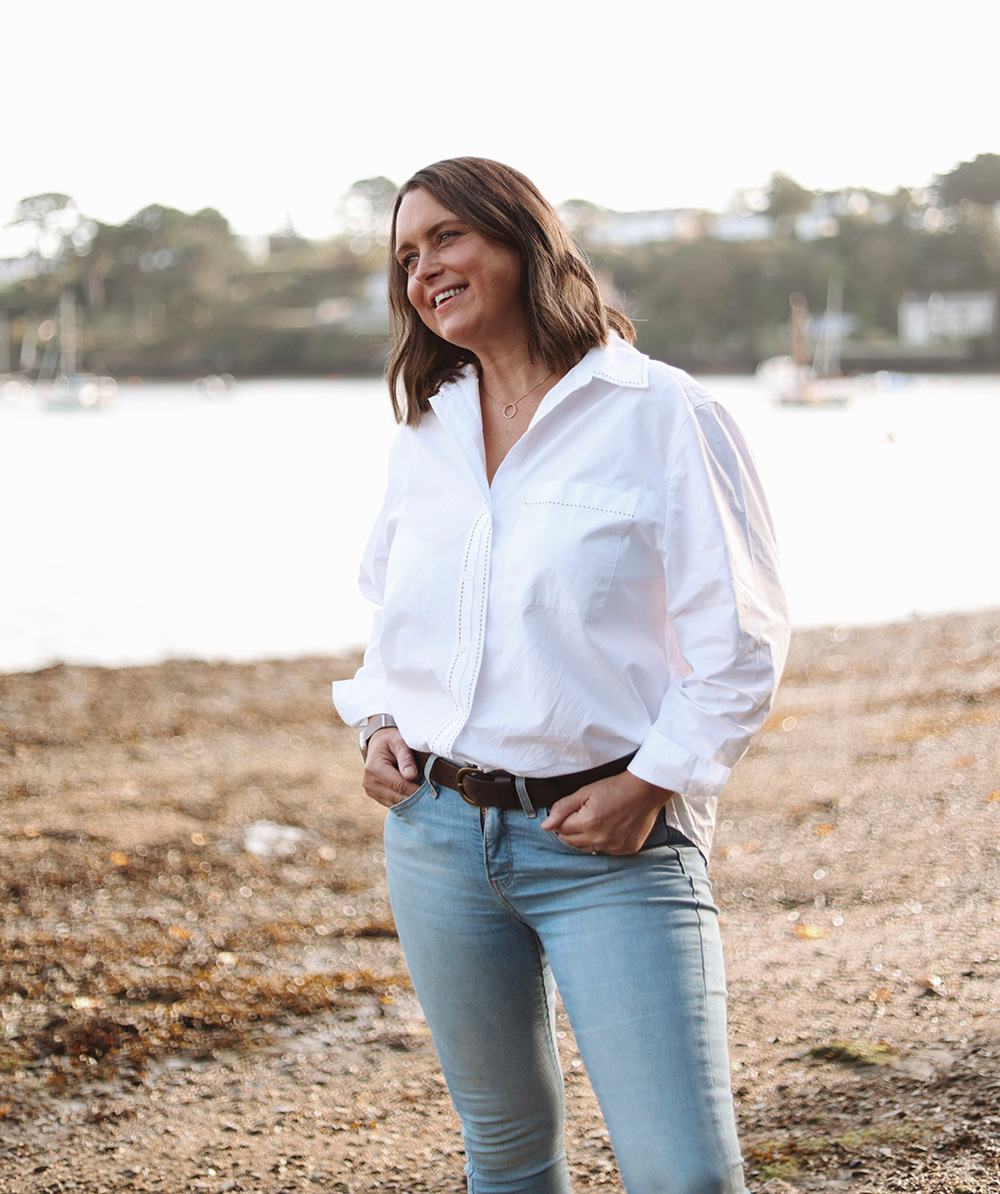
It shows your real people, your real spaces, your real work and your real culture. Not a concept. Not a simulation. Reality.
Authenticity is now a competitive edge
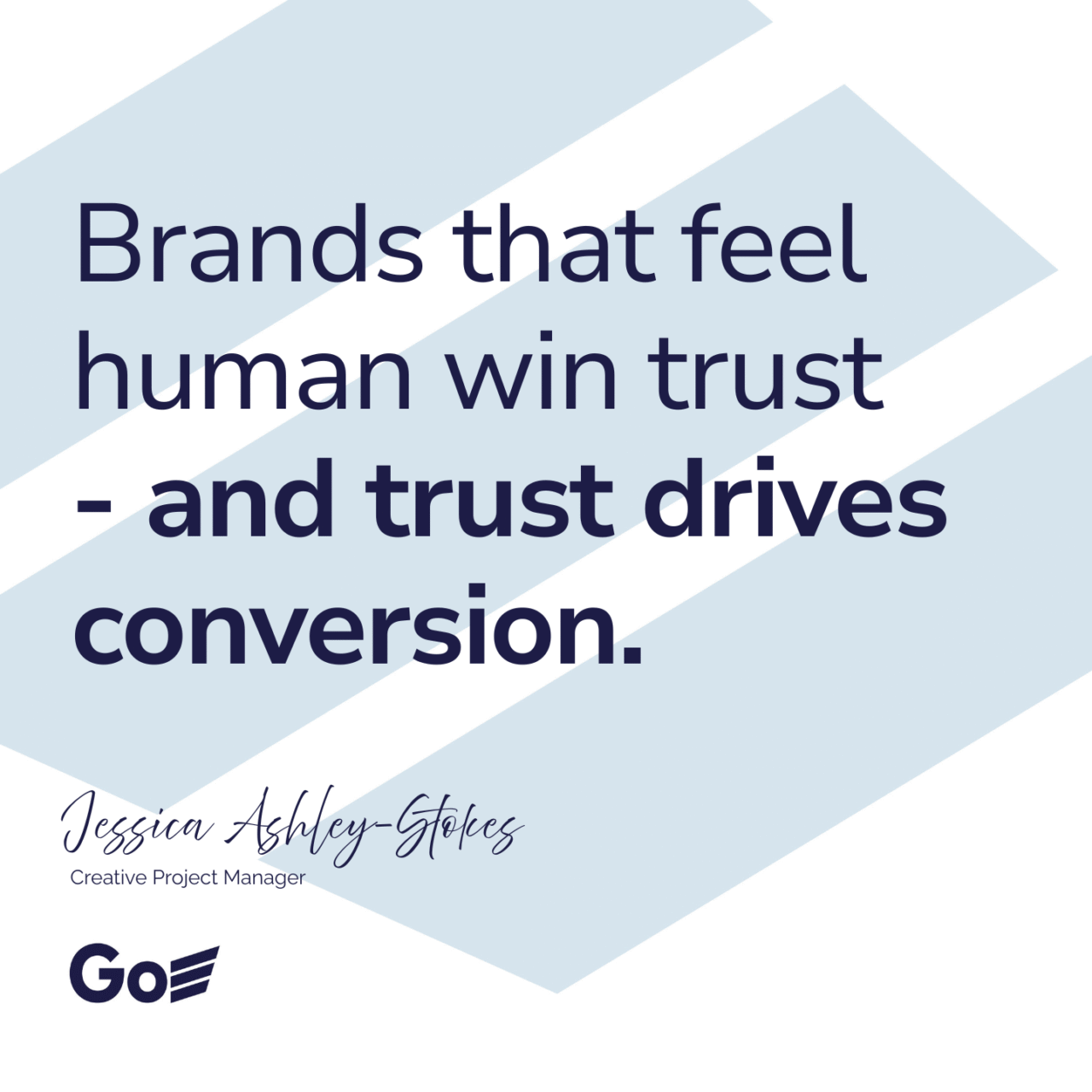
AI is excellent at producing content. It’s terrible at producing credibility. As more brands lean into synthetic imagery, the ones that show real humans and real environments will stand out - not because they’re louder, but because they’re more believable.
Over-produced brand worlds are already starting to feel hollow. “Too perfect” is starting to feel suspicious. Reality is becoming the differentiator.
Photography isn’t decoration. It’s evidence.
Too many businesses still treat photography as a “nice to have”. It isn’t. It’s proof of professionalism, capability, scale and culture. In B2B especially, that proof matters.
- A real team beats a thousand AI-generated “office collaboration” scenes.
- A real workspace beats a fictional one.
- A real customer story beats any abstract visual system.
Photography reduces perceived risk. And in digital, reducing perceived risk is what increases conversion.
The part AI can’t replicate
Great photography doesn’t just show what something looks like. It captures mood, energy, confidence and intent.
Humans read these signals instinctively. You can’t prompt your way to genuine trust.
At GoTripod, we think about this in the same way we think about UX, performance and architecture: Trust is not a layer you add at the end. It’s something you engineer into the experience. Imagery is part of that system.
A thought to leave you with
AI absolutely has a place in modern content production. We use it ourselves where it makes sense. But the brands that win will be the ones who know:
- When to generate
- When to design
- And when to document
Because in a world full of things that look real, being real becomes the strategy.
Let’s talk more
If you’re thinking about how your brand shows up in a world of synthetic content, you’re asking the right questions. Knowing when to use AI, when to design, and when to document real people and real work isn’t always obvious, but it makes a measurable difference to trust, credibility and conversion.
At GoTripod, we help teams make those decisions every day, aligning photography, design and digital experiences so they feel believable, human and real. If you want your platform to earn trust the moment someone lands on it, let’s talk about what authenticity should look like for your business.
Get in touch, we’d love to hear what you’re building.
Gotripod projects make headlines with transformative client success stories
GT have been in the news this week. And for all the right reasons!
We’re thrilled to share that two of our fantastic clients have been featured in the press, highlighting the transformative impact GoTripod’s bespoke software solutions have had on their businesses.
Appearing side by side in this week’s Cornish Guardian, both LetCheck and Finest Retreats shared how their partnerships with GoTripod have delivered game‑changing results.
LetCheck: efficiency through innovation
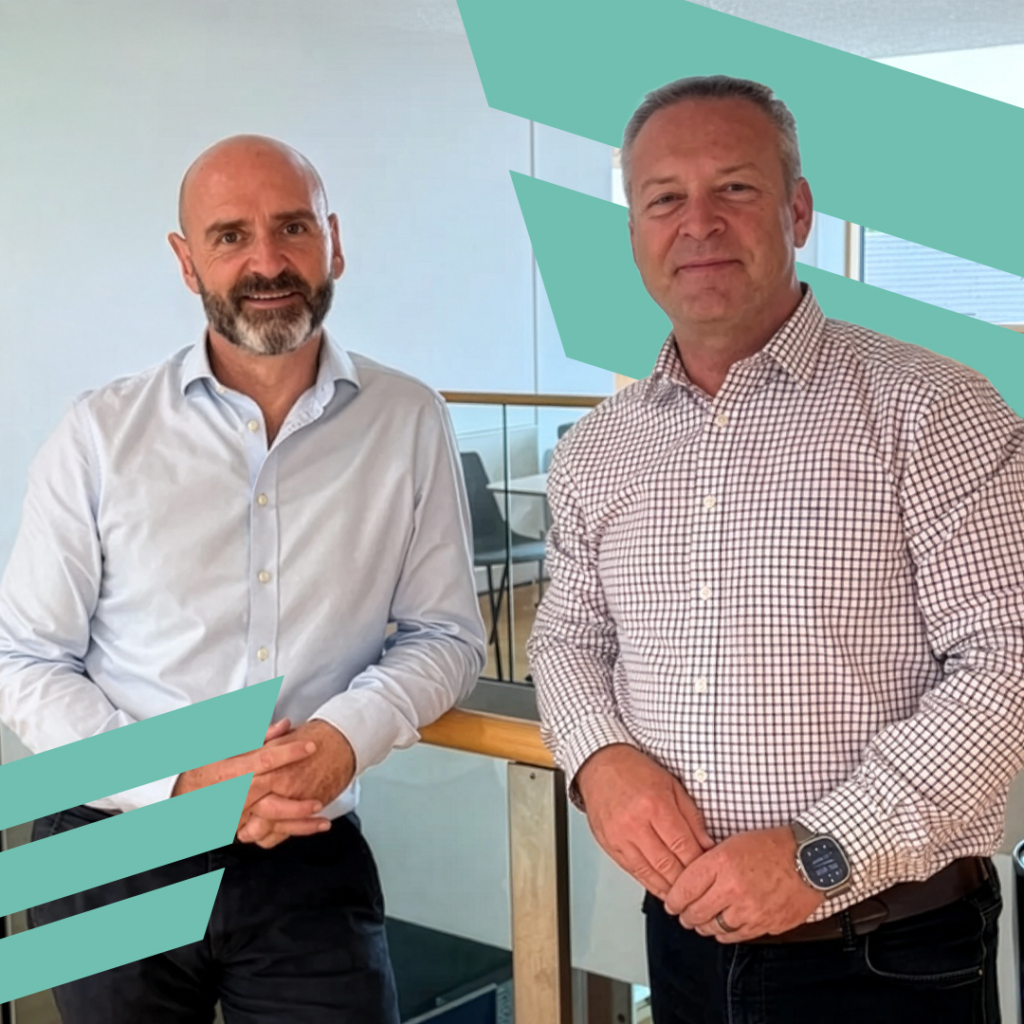
The LetCheck article spotlights the significant time and cost savings generated by their new custom-built GoTripod software system. Designed to simplify the vast amount of data involved in property inventory reporting, the platform streamlines end‑of‑tenancy administration by 60%, converting complex property data into clear, editable reports with ease.
For both LetCheck and GoTripod, this has been an outstanding partnership — one valued highly by leaders Adrian Kelly and Simon Ashley.
You can read an additional Business Cornwall feature on the software solution here.
Finest Retreats: enhancing guest experience through smart integration
Another Cornish success story, Finest Retreats, has also benefited from a strong and collaborative project with GT. Together, we developed a proprietary housekeeper‑management API integration app and supporting web application, fully connected in real time with their property management booking system.
This solution accelerates booking reviews, ensures guest requests are managed proactively, and incorporates essential compliance tools such as fire safety checks and regulatory tracking.
The impact is being felt across the board: property owners can now access photos and video walkthroughs, while Finest Retreats enjoys fewer operational issues and improved guest experiences.
Read the full case study here.
Let's talk
Do you have inefficient processes in your business that could be streamlined and improved with a custom software solution? That's a great starting point for a conversation. We've been helping clients navigate these decisions for over 15 years, and we'd love to help you transform your business too.
Get in touch - We'd love to hear from you.
The hidden environmental cost of legacy software systems
When we talk about sustainability in tech, the conversation often focuses on hardware, of energy-hungry data centres, inefficient old devices, and e-waste. But there’s another culprit lurking in the background quietly contributing to our carbon footprint: legacy software systems.
Why legacy systems are a problem
Older software wasn’t built with energy efficiency in mind; it was often the game changer of its time, negating the need for long time-consuming paper trails and hours of exasperating head scratching.
These systems characteristically:
- Run on outdated infrastructure that consumes more power.

- Require excessive processing resources due to bloated code and inefficient algorithms.
- Depend on older hardware, which lacks modern energy-saving features.
The result? Higher energy consumption, increased cooling requirements, and a bigger environmental impact.
The ripple effect
Legacy systems don’t just affect your internal operations, they impact your entire digital ecosystem:
- Data centres under strain: Inefficient software demands more server power, increasing energy use.
- Slow performance = more energy: Longer processing times mean more electricity consumed per transaction.
- Maintenance overhead: Frequent patches and manual interventions add to resource waste.
Real-world examples

Consider a financial institution running a decades-old mainframe system. These machines can consume up to 10 times more energy than modern cloud-based solutions. Multiply that across thousands of transactions daily, and the carbon footprint skyrockets.
Here are some hard-hitting statistics that reveal the real-world impact:
- The ICT sector, which includes legacy software and outdated infrastructure, currently contributes between 2.1% and 3.9% of global greenhouse gas emissions and that could climb to 14% by 2040, approaching half the emissions of the global transport sector. [opensourcerers.org], [arxiv.org]
- Data centres, often burdened by inefficient legacy software, are responsible for around 1% of global energy-related greenhouse gas (GHG) emissions, with electricity consumption expected to double by 2026. [weforum.org], [parkplacet...logies.com]
- What’s more, data centre emissions are projected to triple by 2030, reaching approximately 2.5 billion tonnes of CO₂ annually. That’s driven largely by inefficient legacy systems and accelerating AI demand. [sustainabi...itymag.com]
- Lastly, 43% of US data centre electricity is consumed purely for cooling inefficient legacy servers, a huge indirect drain on energy resources. [sustainabi...itymag.com]
These figures expose an uncomfortable truth; hanging onto outdated software systems doesn't just hurt productivity, it significantly damages the planet.
The business case for modernisation
Upgrading isn’t just about speed and security, it’s about sustainability.
Modern systems:
- Use cloud-native architectures that scale efficiently.
- Employ optimised code to reduce processing power.
- Run on green hosting platforms, powered by renewable energy.
How GoTripod can help
At GoTripod, we specialise in:
- Custom software development to replace outdated systems with lean, efficient solutions.
- Full-service digital marketing services that prioritises eco-friendly practices.
- Lifecycle planning to ensure your digital assets remain sustainable long-term.
Final thoughts
Legacy systems may feel familiar, but they come with a hidden environmental price tag. By modernising, you’re not just future-proofing your business, you’re helping the planet. But, it’s not just about agility or cost, it’s an urgent ecological necessity.
If you'd like to find out more about replacing legacy software or apps to modernise your business and reduce your carbon footprint, let’s talk. No pressure. No jargon. Just a smart, down to earth conversation about what matters.
Why i chose consultancy over a full-time cto role
I've been having the same conversation a lot lately. Friends at the pub, former colleagues, even my mum – they all ask the same thing: "Why didn't you take that CTO job?"
Fair question, really. Over the past couple of years, I've been offered several full-time CTO roles. Good money, proper challenges, the kind of positions that would look impressive on LinkedIn. The sort of thing that, at 55, you're supposed to jump at.
I said no to all of them.
Instead, I'm still here in my little office at the bottom of the garden, running my business (GoTripod), writing code when I fancy it and working with start-ups and scale-ups who need someone to sort out their technical mess – or better yet, avoid making one in the first place.
People think I'm mad. Maybe I am. But let me explain why it makes perfect sense to me.
The long road here
I've been messing about with technology for over 35 years now. I started properly in the mid 80s, building desktop PCs in Bristol, UK when everyone still thought computers were just for big companies. I spent years crawling under desks running network cables, fixing servers (Novell Netware - anyone remember that?) in dusty cupboards, explaining to frustrated users why their email had stopped working again, driving up and down the M4 motorway to swap a failed hard drive in a server at 2am - Fun times.
From there, I worked my way up through field engineering, technical sales, software development and eventually into proper management roles. For the last 15 years, I've been the person making the big technical decisions – building teams, setting strategy, arguing with finance directors about infrastructure budgets and, yes, occasionally staying up all night when everything's gone wrong.
I've built platforms from scratch, scaled systems that started with three users and ended up serving thousands, and hired more developers than I can count. I've sat through enough board meetings to know that "synergy" is usually corporate speak for "we haven't thought this through properly."
But here's what all that experience taught me: the best decisions often come from outside perspective. When you're too deep in the weeds of one company's politics and processes, it's hard to see the wood for the trees.
Why I love what I do now
Working as a fractional CTO or consultant means I get to parachute into interesting problems without all the baggage. No office politics, no legacy decisions from five years ago that everyone's too scared to change, no endless meetings about meetings.
I can have honest conversations about technical debt without worrying about stepping on toes. Sometimes that means gently suggesting that the custom system they've been lovingly maintaining might not be the best use of their time anymore. Often, problems that feel unique and overwhelming have been tackled before – and there's no shame in learning from what others have done. The technical side still fascinates me. I enjoy writing Python, working through database designs, thinking about how APIs should work. Recently I was helping a client with their ISO 27001 compliance (not the most exciting topic, but important), and this week I'm working with one of my clients on a IoT based silo monitoring solution.
The variety keeps me learning. More importantly, it keeps me curious about what comes next.
Life in the garden office
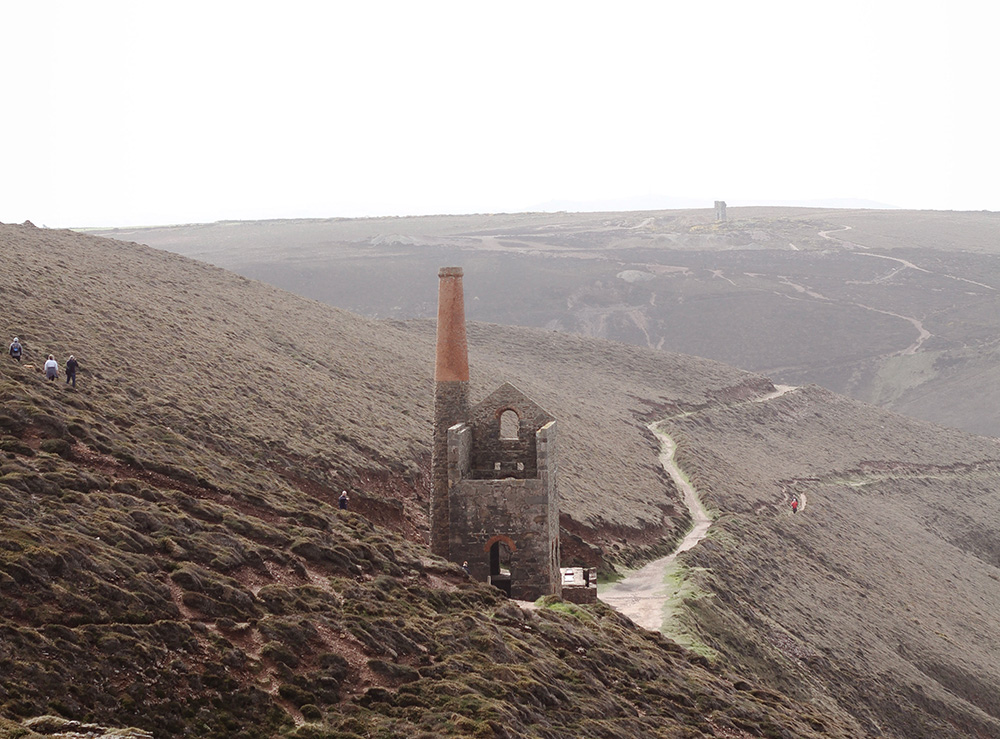
As a remote-first business, we relocated to Cornwall back in 2010 – one of the best decisions we ever made. There's something to be said for working from home down here (though I still split my time between Cornwall and the rest of the UK). I start early, usually around 5am with a proper cup of coffee, and I can hear the birds waking up outside. When I need to think through a tricky problem, there are plenty of jaw dropping and inspiring places I can walk to and let my mind wander.
Try doing that from the 14th floor of a glass tower in Canary Wharf.
My clients benefit too. They get someone who's fully focused on their problems, not distracted by internal company drama. They can scale my involvement up or down based on what they actually need, rather than paying for a full-time executive whether they need one or not.
The tricky bits
Don't get me wrong – being an MD and a fractional CTO isn't always straightforward. Some months are busier than others, and you're constantly juggling multiple clients with different priorities and deadlines. Each business has its own culture, systems, and way of doing things, so you're always adapting.
The responsibility can feel heavy too – when you're advising on critical technical decisions, there's no hiding behind "that's what the consultant recommended" because you are the consultant.
But working again as the MD of GoTripod has changed everything. When challenges come up, we tackle them together as a team. Having people who understand the work makes all the difference – we can bounce ideas around and find solutions none of us would have thought of alone.
Plus, it means I can actually take holidays and there are people handling the marketing and admin bits. Best of both worlds really – all the variety of fractional work, but with proper support.
I recently took overall control of the business again and it's reminded me why I love working with people who share a similar view on life and work. Much better than being another cog in someone else's machine.
What I've learned
If you're thinking about making a similar leap, here's what I wish someone had told me:
Know what problems you actually solve. Clients care about outcomes, not your impressive career history. It took me a while to work out what I'm genuinely good at.
Stay hands-on. Management experience is valuable, but the technology changes so quickly that if you stop doing the actual work, you can lose touch pretty fast. I try to keep coding regularly, even if it's just small projects.
Start small and build trust. One successful project often leads to another. Word of mouth is everything in this game.
Think like a business owner, not a freelancer. You're building something sustainable, not just selling your time by the hour.
Choose your clients carefully. The best ones treat you like a trusted advisor, not just another supplier. Life's too short to work with people who make you miserable.
Why it works for me
Turning down those CTO offers wasn't about avoiding responsibility or taking the easy route. It was about finding a way to do the work I love, with the flexibility I want, at a stage in my life where I know what matters.
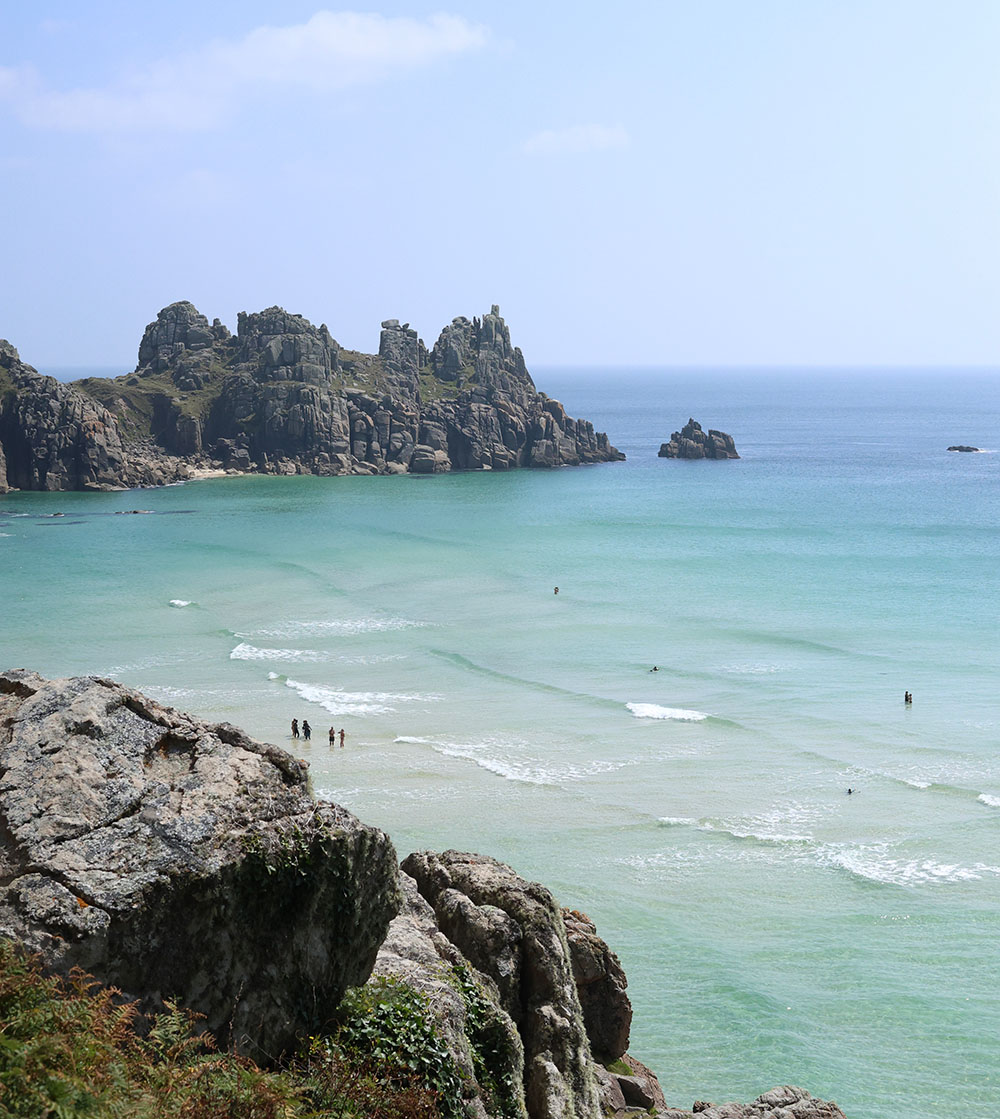
I get to solve interesting technical problems, help businesses grow, and still have time for long walks on the Cornish coast. I can take on challenging projects without the office politics and I can work with multiple companies rather than being tied to just one.
At 55, I've finally worked out what suits me. And it turns out, it's what I'm doing now – even if it took me a while to get here.
If you're a founder or leadership team who could use some experienced technical guidance – whether that's sorting out your architecture, getting compliant with regulations, or just building things properly from the start – drop me a line at gotripod.com I promise I won't try to sell you anything you don't actually need.
Software engagement models: two ways to build great software
Choosing the right engagement model for your project
Here's something we've learned over 15 years of building software: not every project is the same, and trying to force them all into the same box doesn't work.
Some clients come to us knowing exactly what they need. They've done their homework, mapped out the requirements, and want certainty on cost and timeline. Others arrive with a brilliant idea that's still taking shape, they need room to explore, pivot, and discover what works best.
Both are completely valid.
That's why we offer two distinct ways of working together, each designed to give you exactly what you need.
The Explorer's path: day-rate collaboration
We know roughly where we want to go, but we want to discover the best route together.
Day-rate work is perfect when you need flexibility and the freedom to evolve your thinking as you go. You're not buying a fixed outcome, you're buying access to our expertise, our time, and our partnership.
Think of it like hiring a skilled guide for an expedition. You set the direction, and we help you navigate the terrain, pointing out opportunities and pitfalls along the way. If you spot something interesting off the beaten path, we can explore it together.

This approach shines when:
- You're building something new and need room to experiment
- Requirements are still being refined based on user feedback
- You want to iterate quickly and adjust priorities as you learn
- The project scope may grow or shift based on business needs
- You value ongoing collaboration over rigid specifications
How it works in practice
We work in short, focused cycles. At the start of each cycle, we agree on what we'll tackle. We build it, show you the results, gather your feedback, and then decide together what comes next. It's a conversation, not a conveyor belt.
You stay in control of priorities, and we stay focused on delivering value. If something changes — a competitor launches a new feature, customer feedback reveals a better approach, or your strategy shifts — we adapt with you.
The Architect's path: fixed-price delivery
We know exactly what we need. Give us a price and a date.
Fixed-price projects are built on certainty. You tell us precisely what you need, we agree on the scope in detail, and then we commit to delivering that outcome for an agreed price. No surprises, no ambiguity.
Think of it like commissioning an architect to build to your exact specifications. The blueprints are drawn, the materials are specified, and everyone knows what the finished building will look like before the first brick is laid.
This approach shines when:
- You have clear, well-defined requirements
- Budget certainty is essential for your planning
- You're replacing or upgrading an existing system with known functionality
- Stakeholders need to sign off on costs before work begins
- The project has regulatory or compliance requirements

How it works in practice
Everything starts with a detailed Statement of Work. We invest time upfront to understand exactly what you need, document every requirement, and agree on what's included. And crucially, what isn't. This clarity protects both of us.
Once we shake hands, we take on the delivery risk. If something takes longer than expected, that's on us. You get the outcome you specified, for the price you agreed.
At a glance
| Explorer (Day-Rate) | Architect (Fixed-Price) | |
|---|---|---|
| Best for | Evolving ideas, discovery, ongoing development | Well-defined projects with clear requirements |
| Flexibility | High — change direction anytime | Defined upfront, changes via formal process |
| Cost certainty | Pay as you go, scale up or down | Agreed price, locked in from the start |
| You get | Our expertise, time, and partnership | A specific, agreed deliverable |
Real-world examples
We want to improve our application form, but we're not sure exactly how yet.
The Explorer approach: We'd start by reviewing the current form together, understanding the pain points, and identifying quick wins. Then we'd tackle improvements one at a time, perhaps starting with a single new field and its integration. After each change, we'd review the results together and decide what to improve next. If your thinking evolves along the way, we evolve with you.
We need a new customer portal with these exact features, and we need it by March.
The Architect approach: We'd work with you to document every feature in detail, agree on the scope and exclusions, and provide a fixed price for delivery. You'd know exactly what you're getting, when you're getting it, and how much it will cost, before we write a single line of code.
Choosing the right path
Neither approach is inherently better, they're tools for different jobs. The right choice depends on where you are in your journey and what matters most to you right now.
Sometimes projects even blend both approaches. You might start with day-rate discovery work to figure out exactly what you need, then transition to a fixed-price phase for the build. Or you might have a fixed-price core project with day-rate support for ongoing enhancements.
The important thing is being intentional about which mode you're in. When everyone understands the rules of engagement, projects run smoothly, expectations are met, and great software gets built.
Let's talk
Not sure which approach fits your project? That's a great starting point for a conversation. We've been helping clients navigate these decisions for over 15 years, and we'd love to help you find the right path.
Get in touch - We'd love to hear what you're building.
The tagline is back
For years, the tagline was treated like a relic, something brands dusted off for campaigns and then quietly shelved. But in 2025, it’s back in demand. We’ve seen it in RFPs (Requests for Proposals) from pharmaceuticals to footwear, and in the market itself: Tag Heuer’s “Designed to Win”, Ford’s global “Ready Set Ford”, Carrier’s purpose-driven “For the world we share.” Even Shake Shack made headlines for simply announcing they plan to have a tagline.
And then there’s Nike. By evolving “Just Do It” into “Why Do It?”, they’ve reimagined the most iconic tagline of all time, turning a call to action into a question that speaks to a new generation. That’s not nostalgia; that’s strategy.
Why now?
Two forces are driving this resurgence:
- Complexity inside brands. Today’s brand systems span continents, channels, and cultures. Maintaining consistency is hard. A tagline offers clarity, a single phrase that cuts through complexity and anchors the brand.
- Noise outside brands. With AI reshaping the digital landscape and performance marketing under pressure, attention is scarce. Adobe Analytics reports a 1,200% surge in retail traffic from generative AI sources in just eight months. In this shifting infoscape, a tagline becomes a beacon, a memorable hook that helps your brand stand out.
The risk and the opportunity
A tagline isn’t a silver bullet. It can’t fix broken processes or replace a robust brand system. But when designed with clarity, purpose, and creativity, it can amplify your story and signal a new chapter.
Think of it like a tag on a pair of jeans: part of a bigger whole. Your tagline should work in harmony with your name, logo, tone of voice, and design system, not overshadow them.

How to make it matter
- Assign a role. Is it a rallying cry, a mindset, a heritage marker? Define its job before you write it.
- Design it like an asset. Treat your tagline with the same rigour as your logo: strategic, distinctive, and built to last.
- Think dialogue, not monologue. Nike’s “Why Do It?” works because it builds on decades of conversation with athletes. Your tagline should invite engagement, not just deliver a punchline.
Why SMEs should care
Big brands aren’t bringing back taglines for fun. They’re doing it because clarity wins in a noisy world. For SMEs, that matters even more. You don’t have global ad budgets, but you do have the ability to be sharp, memorable, and consistent. A tagline is your shortcut to that clarity.
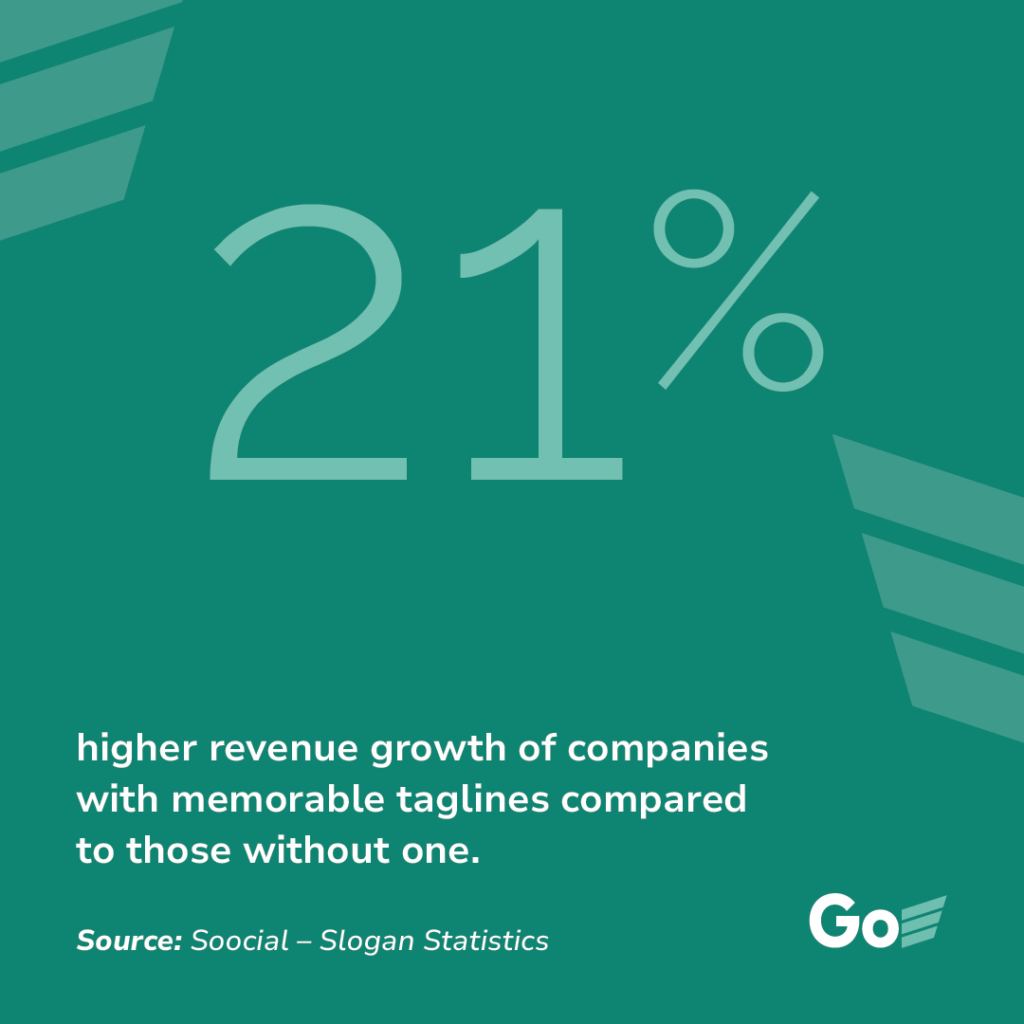
Here’s why it works for SMEs:
- Cuts through complexity. SMEs often juggle multiple roles and messages. A tagline anchors your brand and keeps everyone aligned.
- Boosts trust and professionalism. A well-crafted tagline signals maturity and confidence, key for winning investors, partners, and customers.
- Works everywhere. From your website to your pitch deck, social posts to packaging, a tagline gives you consistency without extra effort.
In short, a tagline is a small investment with a big return. It’s not just a line, it’s a lever for growth.
The bigger picture
At GoTripod, we believe brand expression is a system, not a slogan. A tagline can spark attention, but the real power lies in how your brand elements work together: messaging, design, experience, and yes, software. Because in a world where complexity is the norm, clarity isn’t just nice to have. It’s transformative.
Ready to craft a tagline that actually means something? Let’s create it—together.
Authenticity and human connection in digital design
In a world dominated by automation and AI-driven experiences, the brands that stand out aren’t the ones shouting the loudest. They’re the ones speaking the truth. Authenticity and human connection aren’t trends, they’re timeless principles that matter more than ever
Why authenticity matters

Authenticity is the foundation of trust. When a brand feels real, people lean in. They believe what you say, engage with what you create, and stay loyal when competitors try to lure them away.
In design, authenticity shows up in the details: the tone of your copy, the honesty of your imagery, and the clarity of your user experience. Consumers today are hyper-aware. They can spot generic templates, stock photos, and hollow messaging from a mile away. They crave brands that feel human, brands that share values, admit imperfections, and communicate with clarity and confidence.
Psychological insight: People are wired to seek patterns that feel familiar and safe. Authentic design taps into this by using real-world cues, natural language, relatable imagery, and consistent visual systems, to reduce cognitive load and build trust. This is cognitive ease in action: when something feels simple and intuitive, it feels right.
Human connection in a digital world
Technology has made it easier to reach people, but harder to truly connect. Automated emails, AI chatbots, and algorithm-driven feeds often strip away the warmth of human interaction. That’s why design must do more than look good, it must feel good. It should create moments of empathy, spark dialogue, and remind users that there are real people behind the pixels.
Human connection in design means:
- Conversational tone instead of corporate jargon.
- Inclusive experiences that respect diversity and accessibility.
- Visual storytelling that reflects real life, not staged perfection.
- Micro-interactions that feel thoughtful, not mechanical.
Psychological insight: Reciprocity matters. When brands show care and effort in design, through helpful content, intuitive flows, and genuine messaging, users feel valued and respond with trust and loyalty.
Principles behind authentic design
Clarity over complexity
Authentic brands don’t hide behind jargon or over-engineered interfaces. They communicate simply and design for ease. Every click should feel intuitive, every message should feel honest.
Psychology at play: Cognitive ease makes users trust what feels simple and clear.
Consistency builds trust
From your logo to your language, consistency signals reliability. It’s not about rigid templates, it’s about creating a unified experience that feels familiar and dependable across every touchpoint.
Psychology at play: The mere-exposure effect shows that familiarity breeds comfort. Consistent design elements help users feel safe and confident.
Empathy at every stage
Design with empathy means understanding user needs, frustrations, and aspirations. It’s about mapping journeys that remove friction and add delight. When users feel understood, they feel connected.
Psychology at play: Empathy mapping reduces anxiety and builds trust, especially during onboarding or error states.
Transparency is non-negotiable
Whether it’s pricing, policies, or product features, transparency is the bedrock of authenticity. In design, this means clear navigation, accessible content, and honest messaging.
Human-centred innovation
Innovation isn’t about adding features for the sake of novelty. It’s about solving real problems for real people. Every design decision should start with the question: “How does this make life better for the user?”
The business case for authenticity
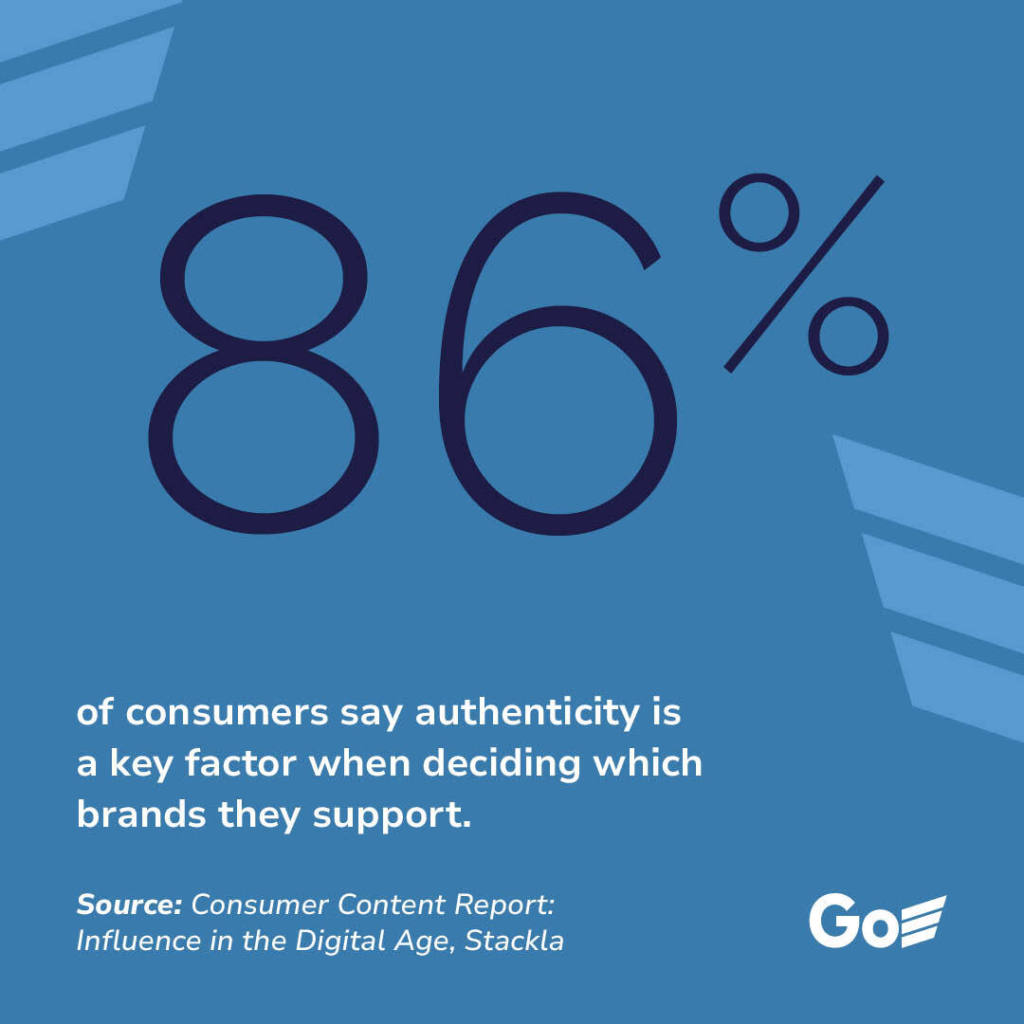
Authenticity isn’t just a feel-good concept, it drives measurable results. Research shows that 86% of consumers say authenticity is a key factor when deciding which brands they like and support (Stackla). Brands that prioritise human connection see higher engagement, stronger loyalty, and better conversion rates.
When design reflects authenticity, it becomes a growth engine. It turns users into advocates and transactions into relationships.
How GoTripod embeds authenticity
At GoTripod, we believe design is more than aesthetics, it’s a conversation. We embed authenticity and human connection into every stage of the digital journey:
- Discovery workshops to uncover real user needs and brand truths.
- Inclusive design principles to ensure accessibility and representation.
- Tone of voice frameworks that sound human, not robotic.
- Visual storytelling that feels genuine and aligned with your brand values.
Our goal? To create digital experiences that don’t just perform, they resonate.
Conclusion
In an age of automation, authenticity is your competitive edge. Human connection is your growth strategy. Brands that embrace these principles will not only stand out, they’ll stand for something.
If authentic, human‑centred design is part of your growth strategy, let’s talk about how GoTripod can bring authenticity to your brand.